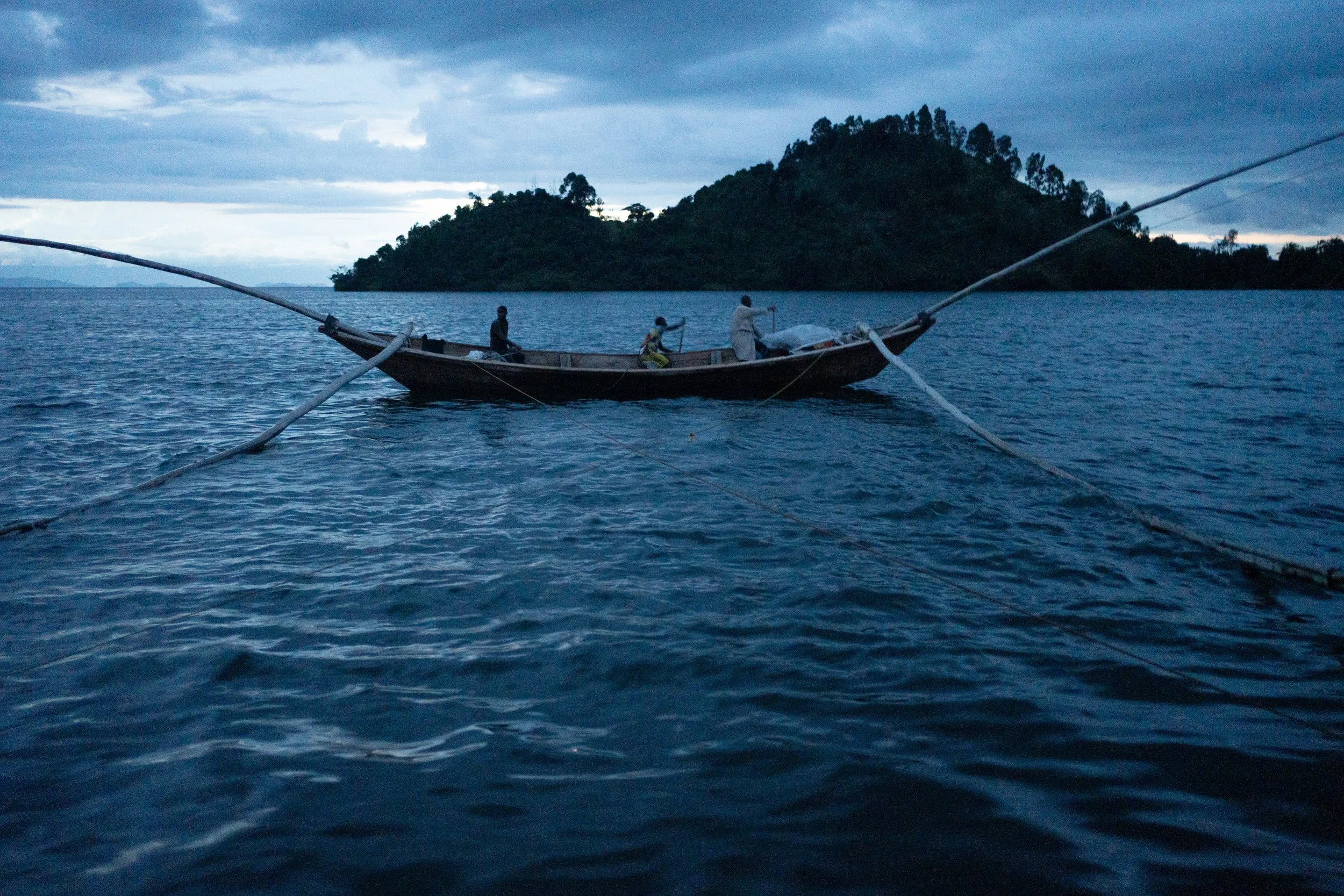
Troubled Waters
Lake Kivu lies between Rwanda and the Democratic Republic of the Congo. From the genocide against the Tutsis in 1994 to the recent capture of Goma (this past January) by M23 rebels backed by Rwanda, it has been a silent witness to over 30 years of turbulent conflict between the two countries. More than just a border, the lake forms an unbreakable bond between the people who live along its shores.
Every night, Rwandan and Congolese fishermen gather on its waters to catch sambaza (small sardines), which are vital to the local economy but are becoming increasingly scarce. In this seismically unstable region dotted with active volcanoes, Lake Kivu also holds many mysteries. A mermaid goddess is said to live in its depths, luring men into a cave filled with deadly gas. Indeed, the lake is a true ticking time bomb. It contains 2.6 gigatonnes of CO₂ and about 60 km³ of dissolved methane—amounting to nearly 5% of global greenhouse gas emissions. A limnic eruption could release these toxic gases, threatening the lives of nearly two million people. Pollution, climate change, and the presence of methane threaten the lake’s fragile ecosystem, adding to the uncertainty that weighs on the communities along its shores—already grappling with a war that has torn the region apart for decades.
According to legend, the mermaid also serves as a guide between the world of the living and the spirits of the dead. But how many more bodies will she have to gather from the depths before peace finally returns to the shores ?
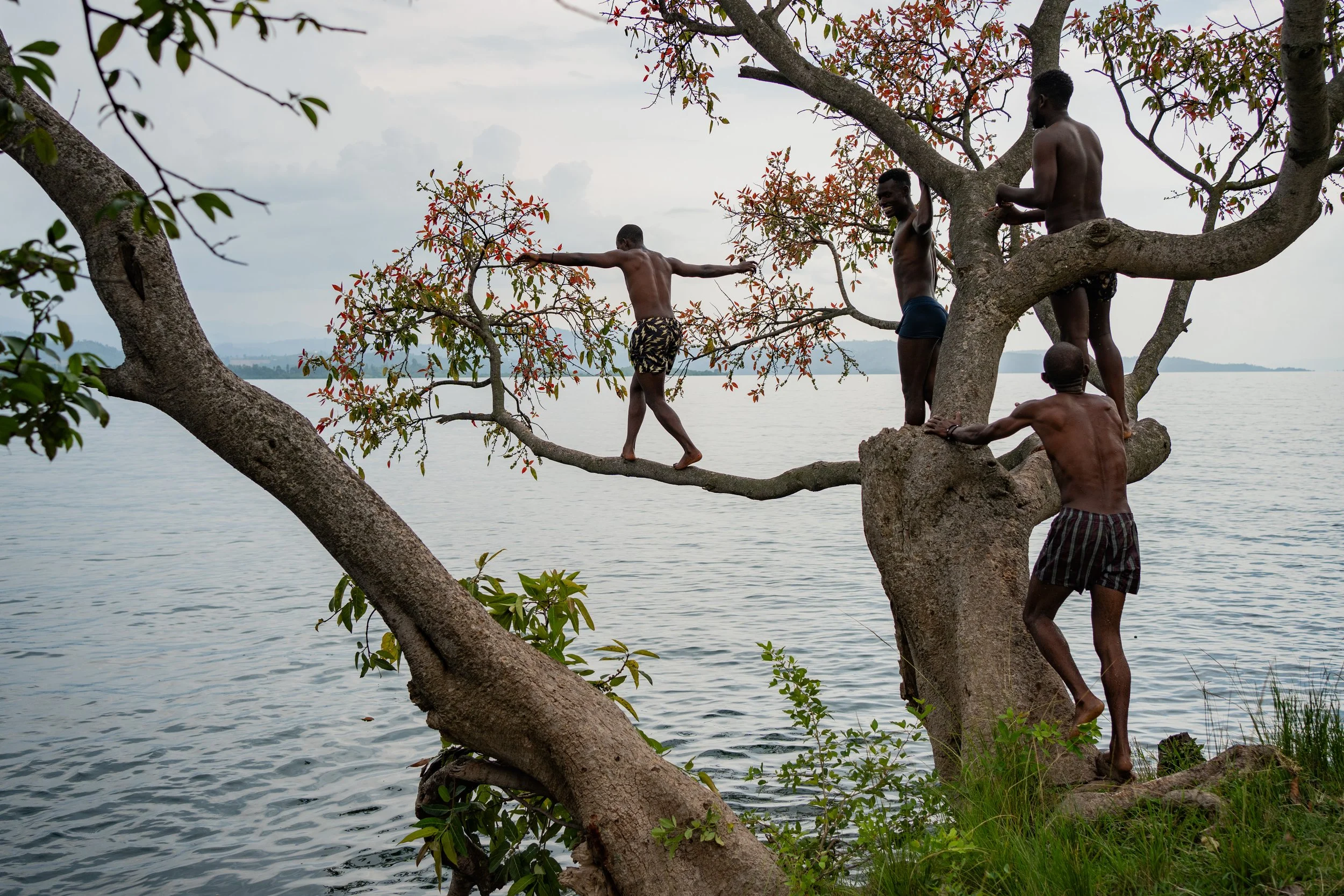
Young Rwandans dive into Lake Kivu from an island nicknamed “Peace Island.”
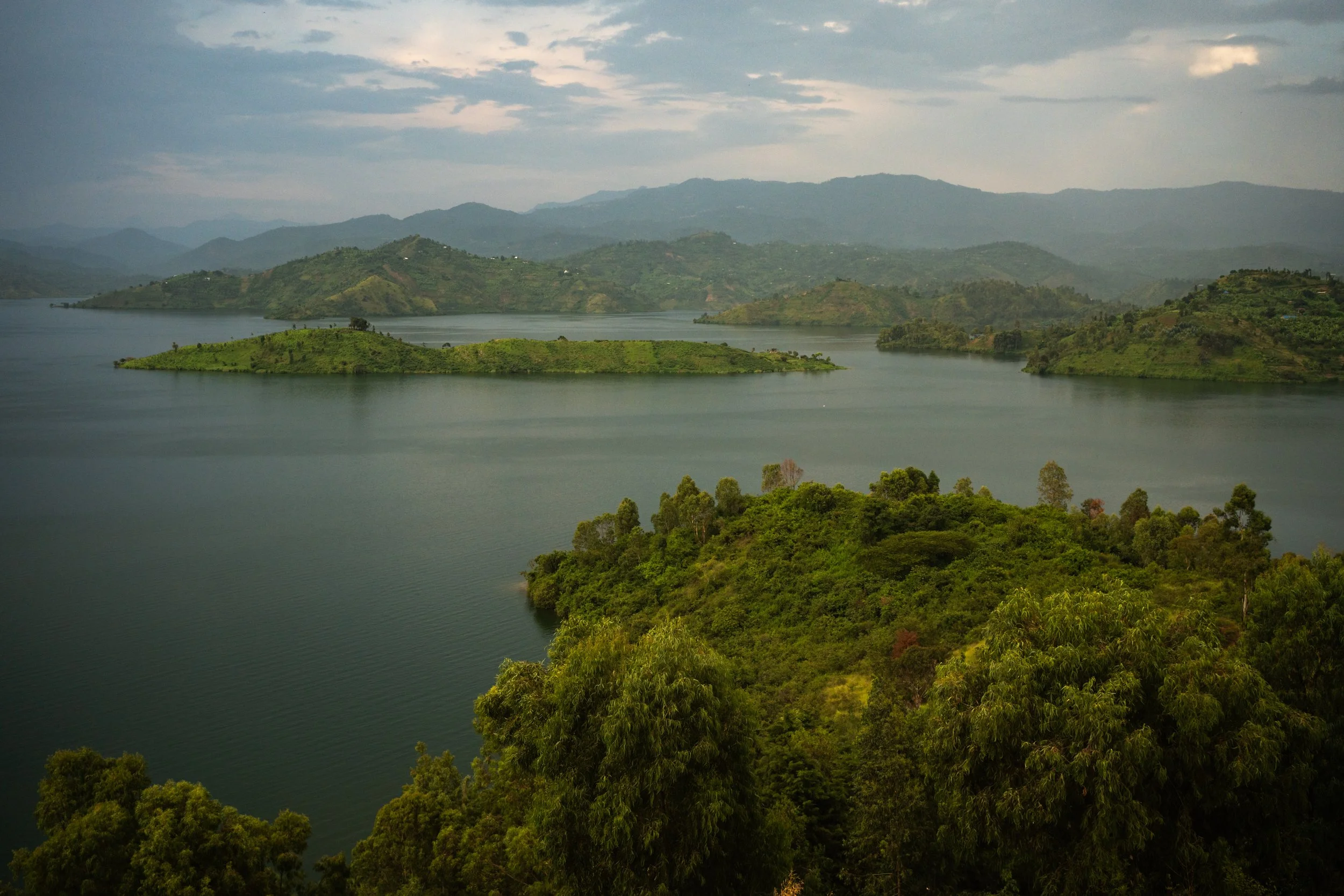
Kibuye, Rwanda. According to legend, a mysterious mermaid goddess inhabits the depths of Lake Kivu, seducing men with her enchanting charm. Those who succumb to her call are lured into a cave filled with deadly gas.
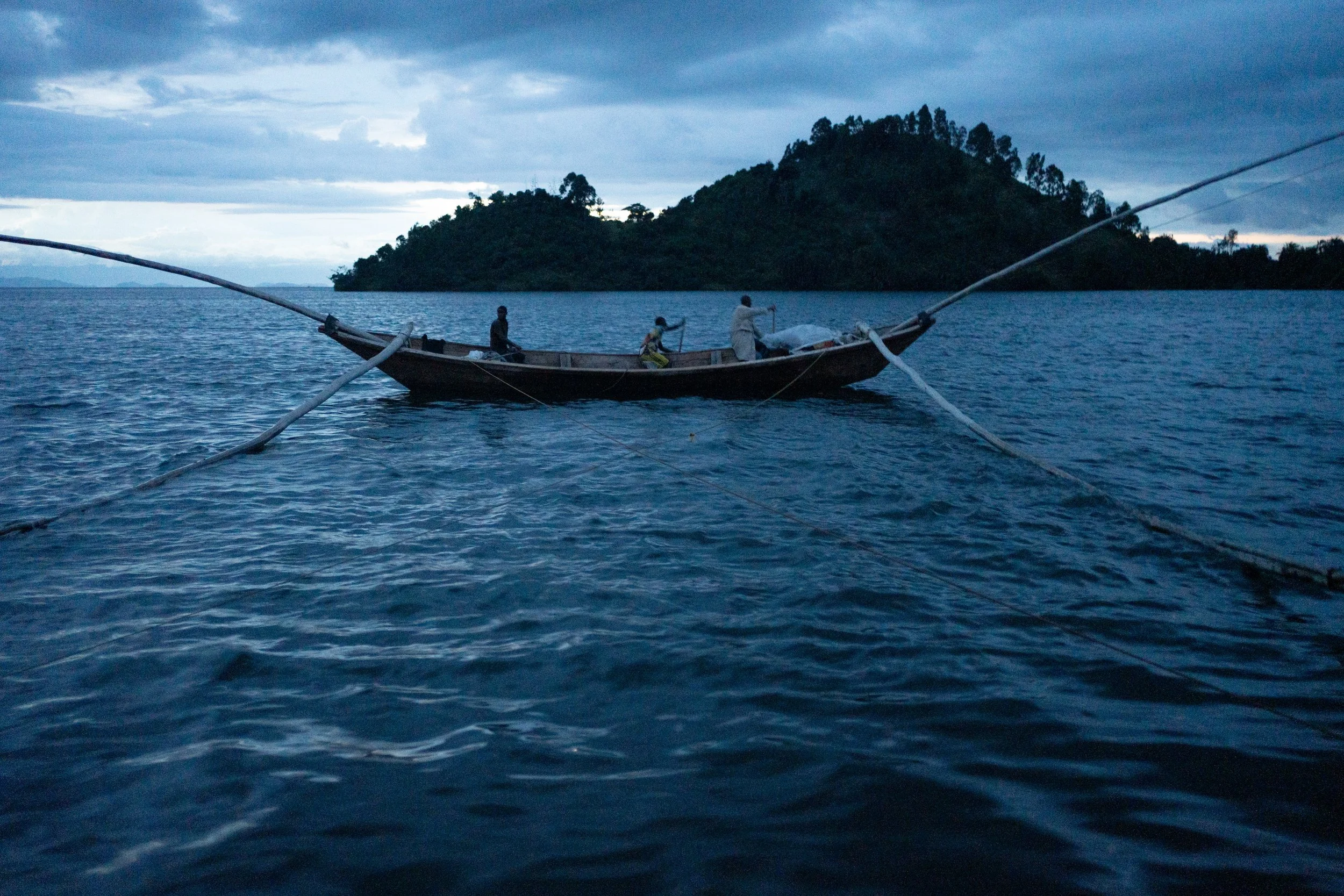
John is the captain of a crew of nine people operating three boats. Every evening, at dusk, they set out on the lake to fish.
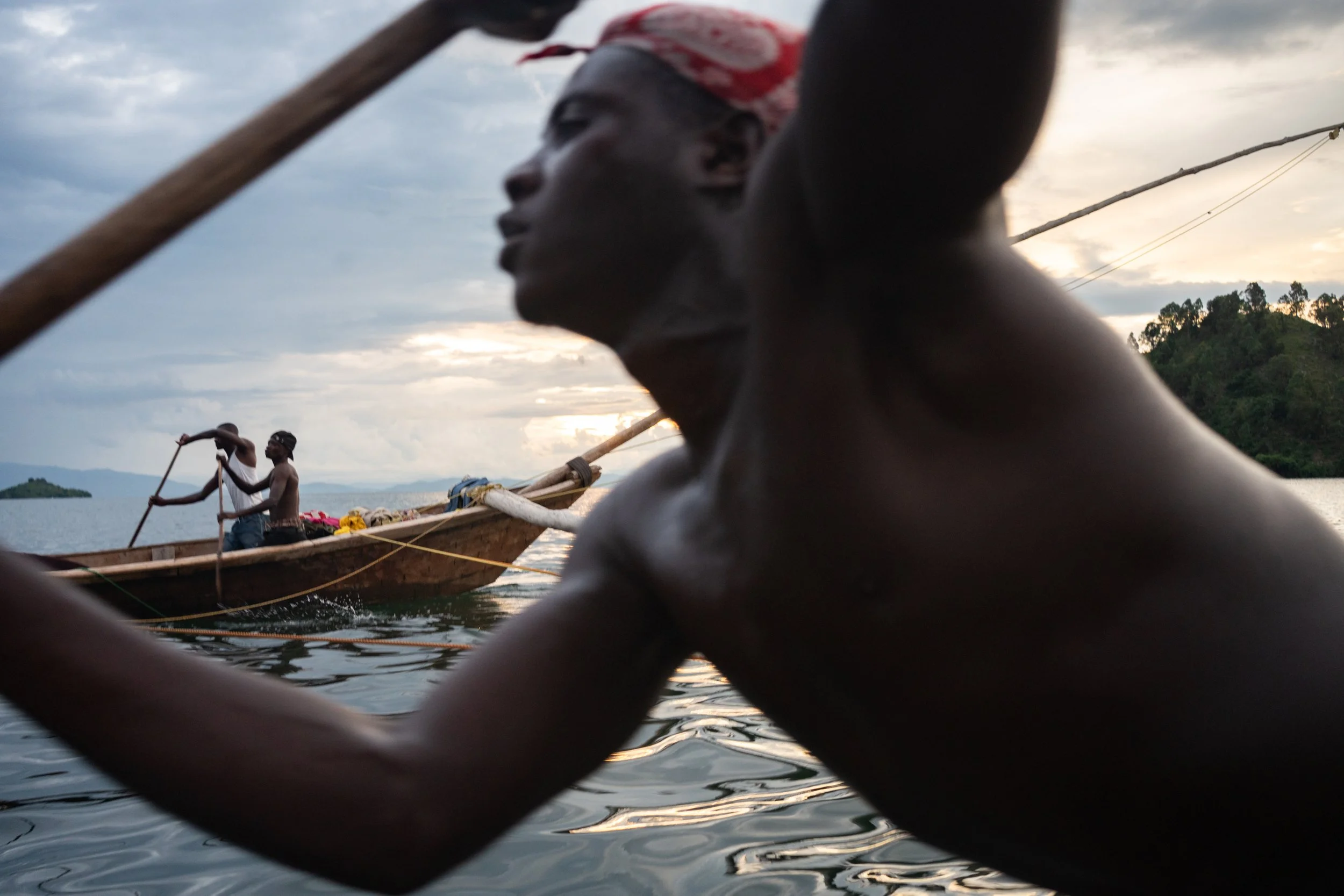
“It’s dark, so do your job and we’ll catch lots of fish. Don’t worry today—we’ll get a good haul. Keep going, because you need money and a beautiful wife. Don’t fret, life is too short. Do your job and enjoy your money,” sings Froduard, 25, to muster courage before heading out to fish.
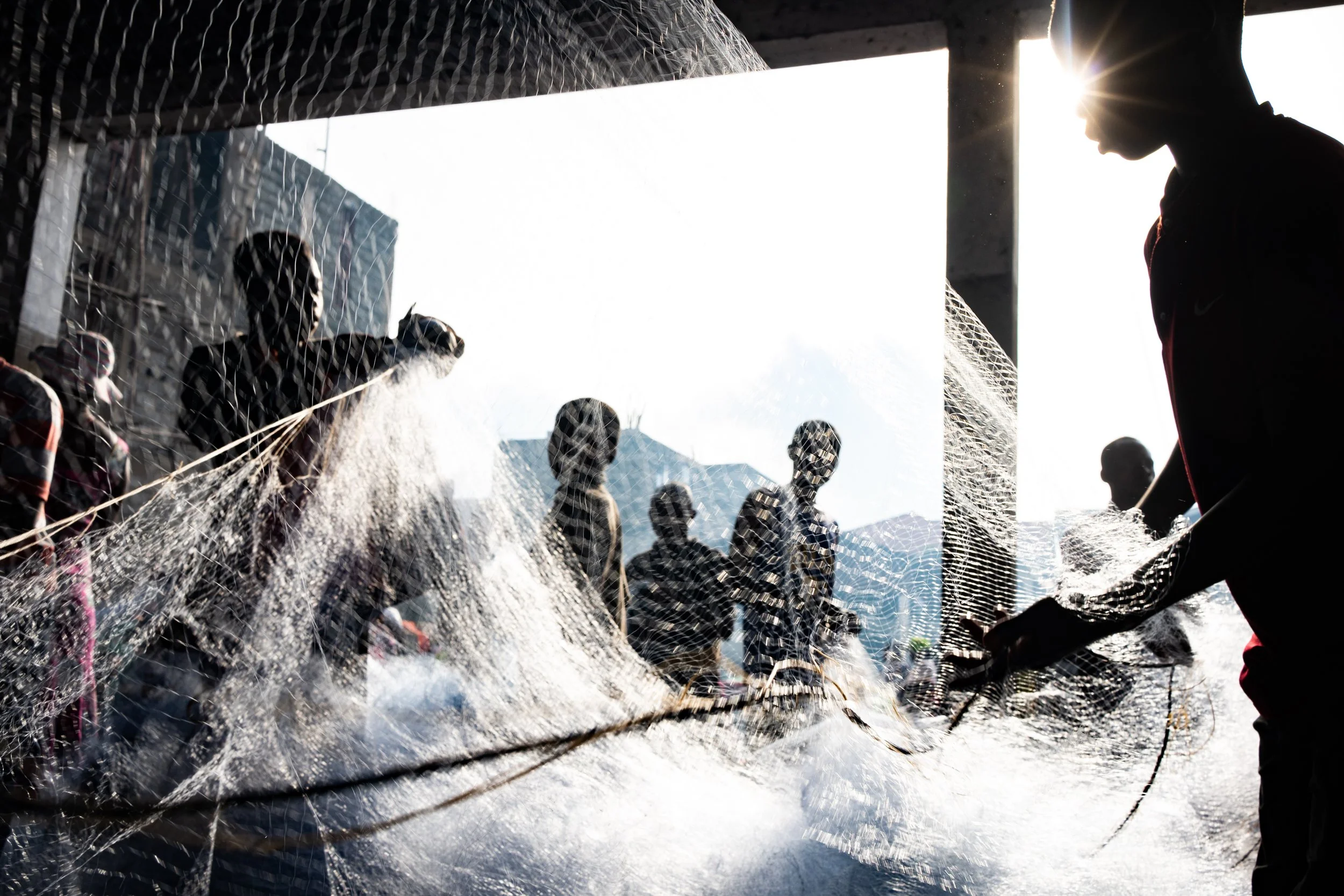
At Kituku port in Goma, fishermen repair their nets. “It is thanks to the lake that my children go to school and eat. But before, fishing was better. It’s becoming more and more difficult,” says Jérôme Bahati, a fisherman since twenty years.
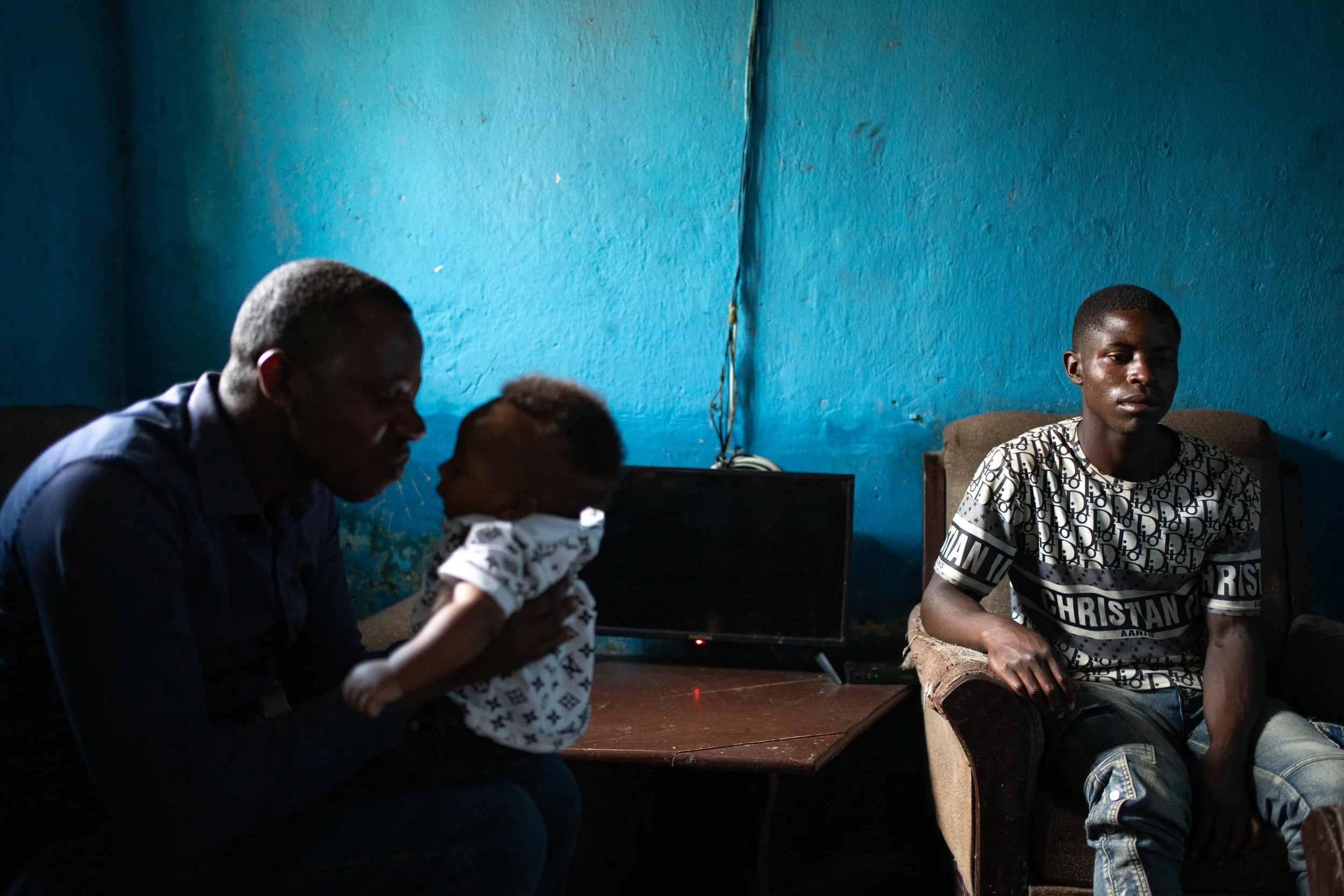
“Just ten years ago, we used to catch 300 kilograms per night; today, it's barely half that. I’ve heard about methane and know its dangers, but what worries me most is the disappearance of the sambazas. Could it be linked to the gas?” says John, a fisherman (on the left), with his daughter and one of his employees. At night, they set out fishing together.
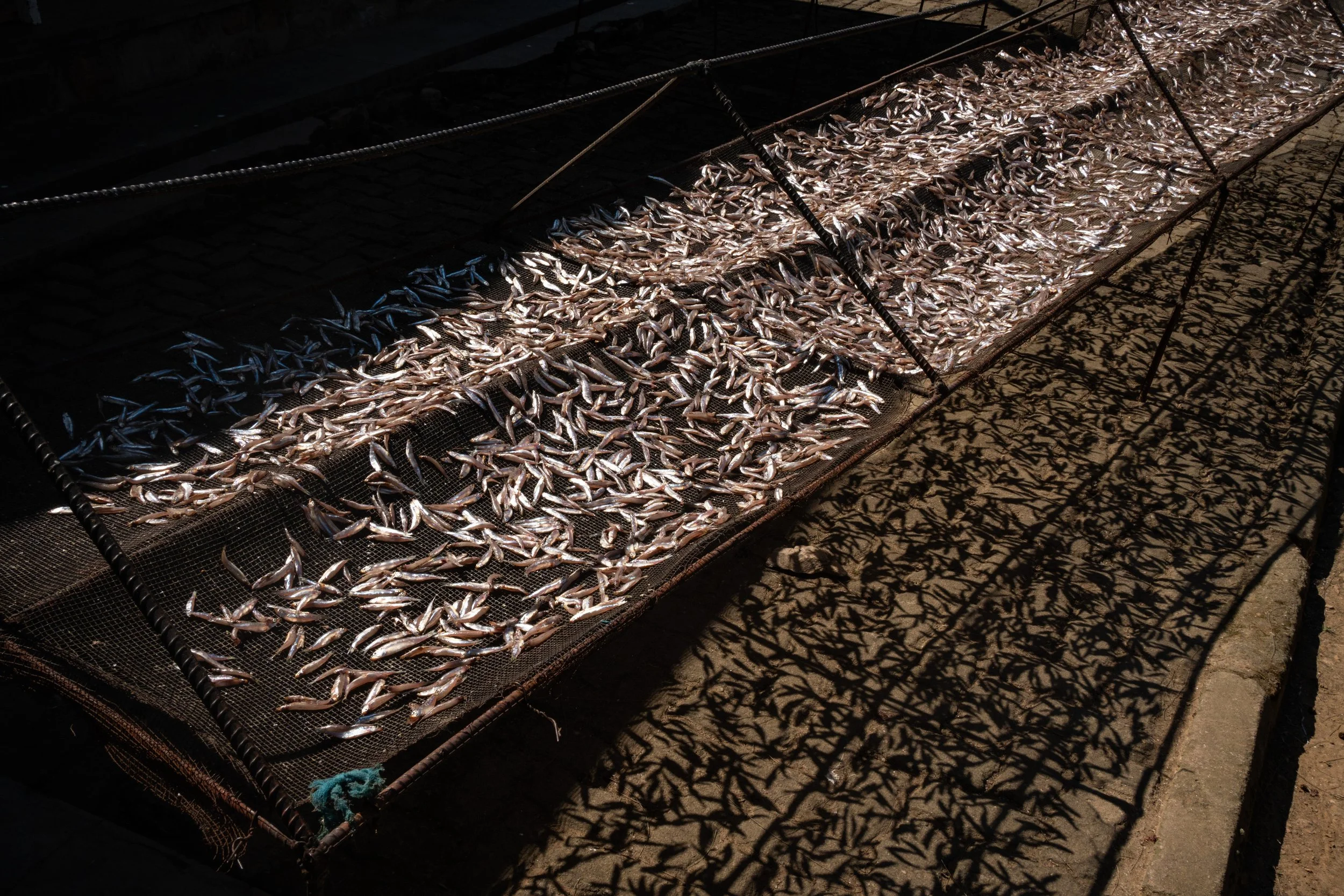
“Sambaza” are a species of small, abundant fish in Lake Kivu, serving as a vital food source and economic resource for lakeside communities in Rwanda and DRC. These fish are often dried or smoked for preservation and play a crucial role in the local village economy.
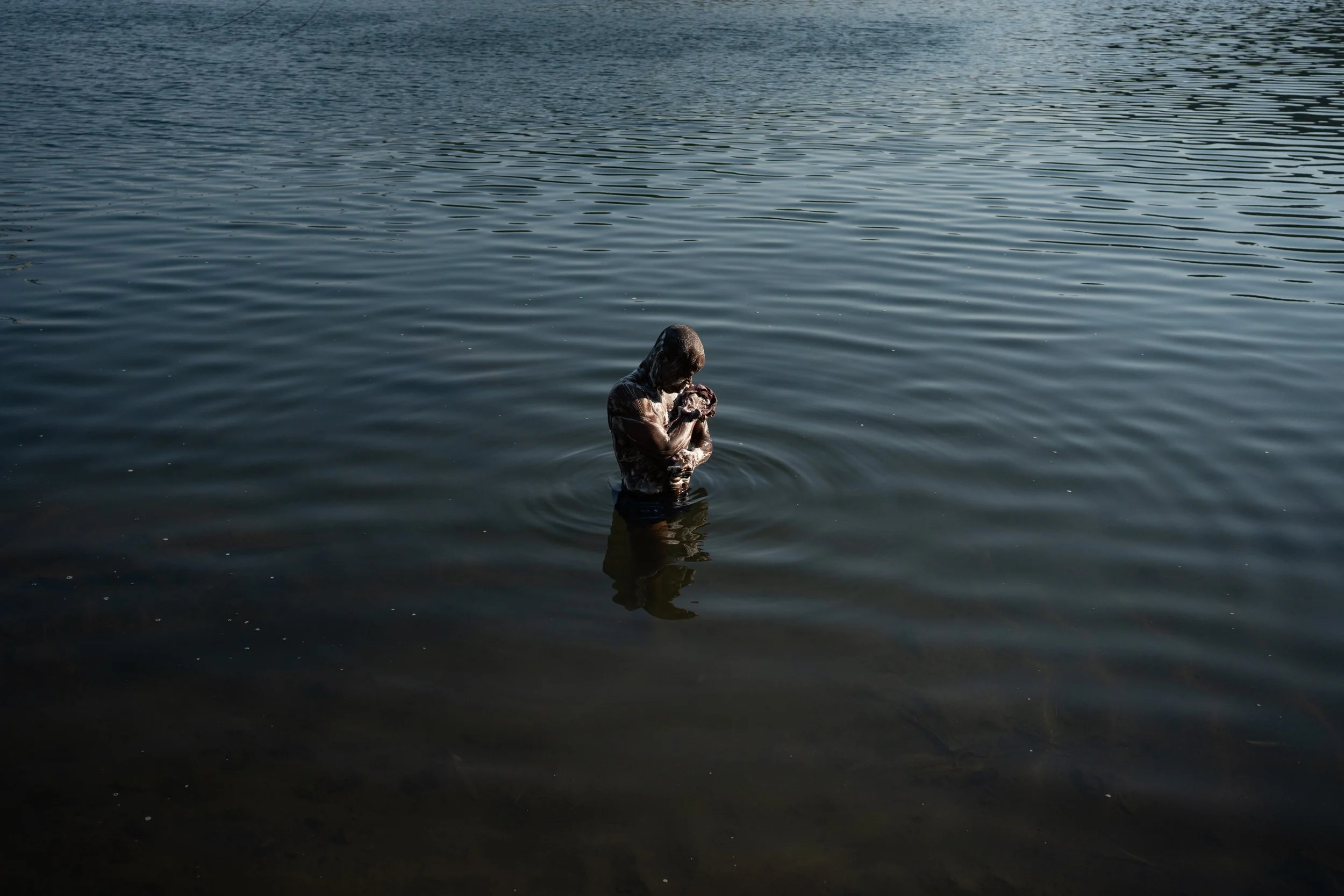
Alphonse is a fisherman living on an island. He spends the entire night fishing and returns to his family in the morning. Since he has no running water, he washes himself in the lake
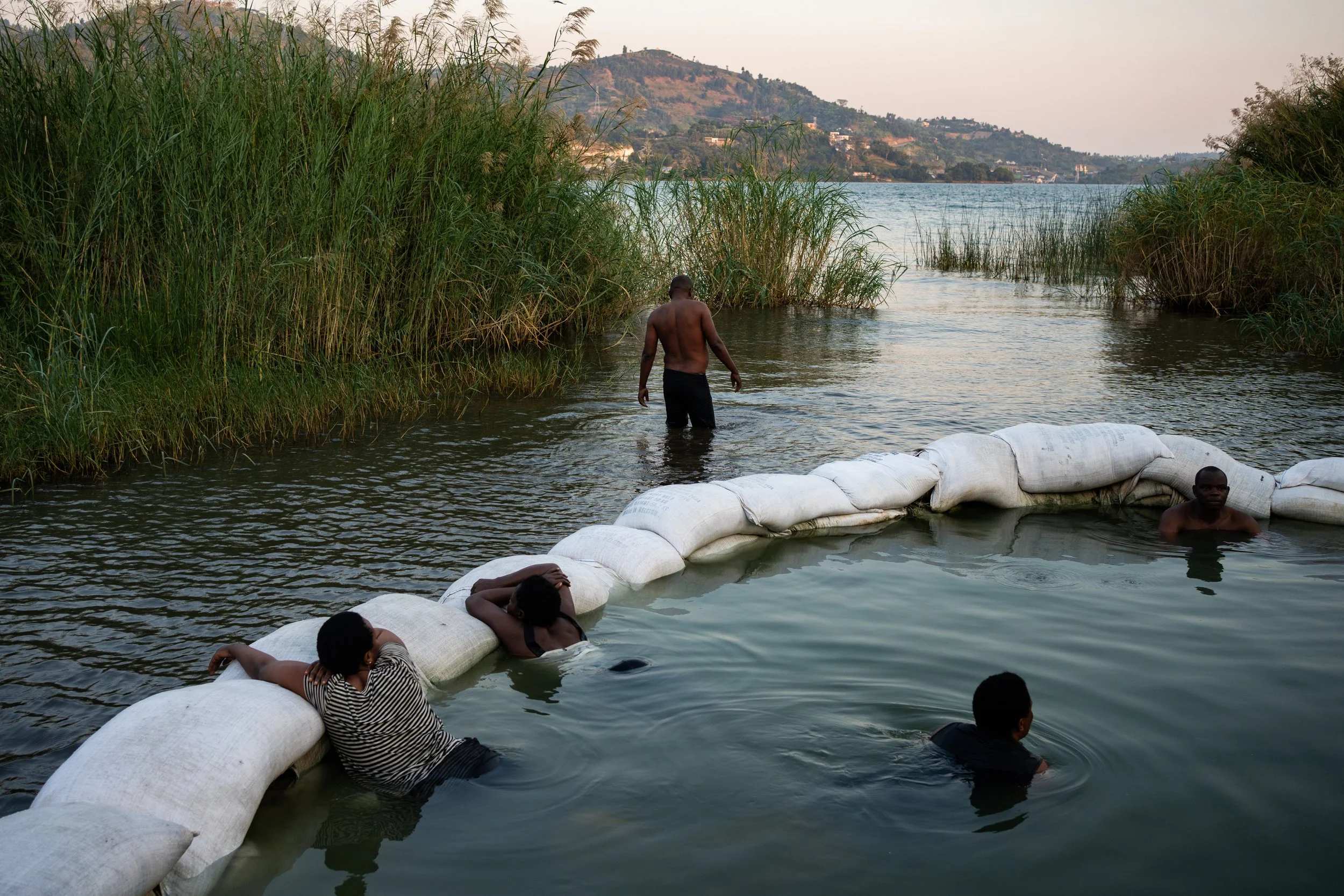
The Nyamyumba hot springs are renowned for their thermal and mineral properties. Lake Kivu, situated in a particularly seismically active zone, is dominated by Mount Nyiragongo, one of the continent’s most active volcanoes.
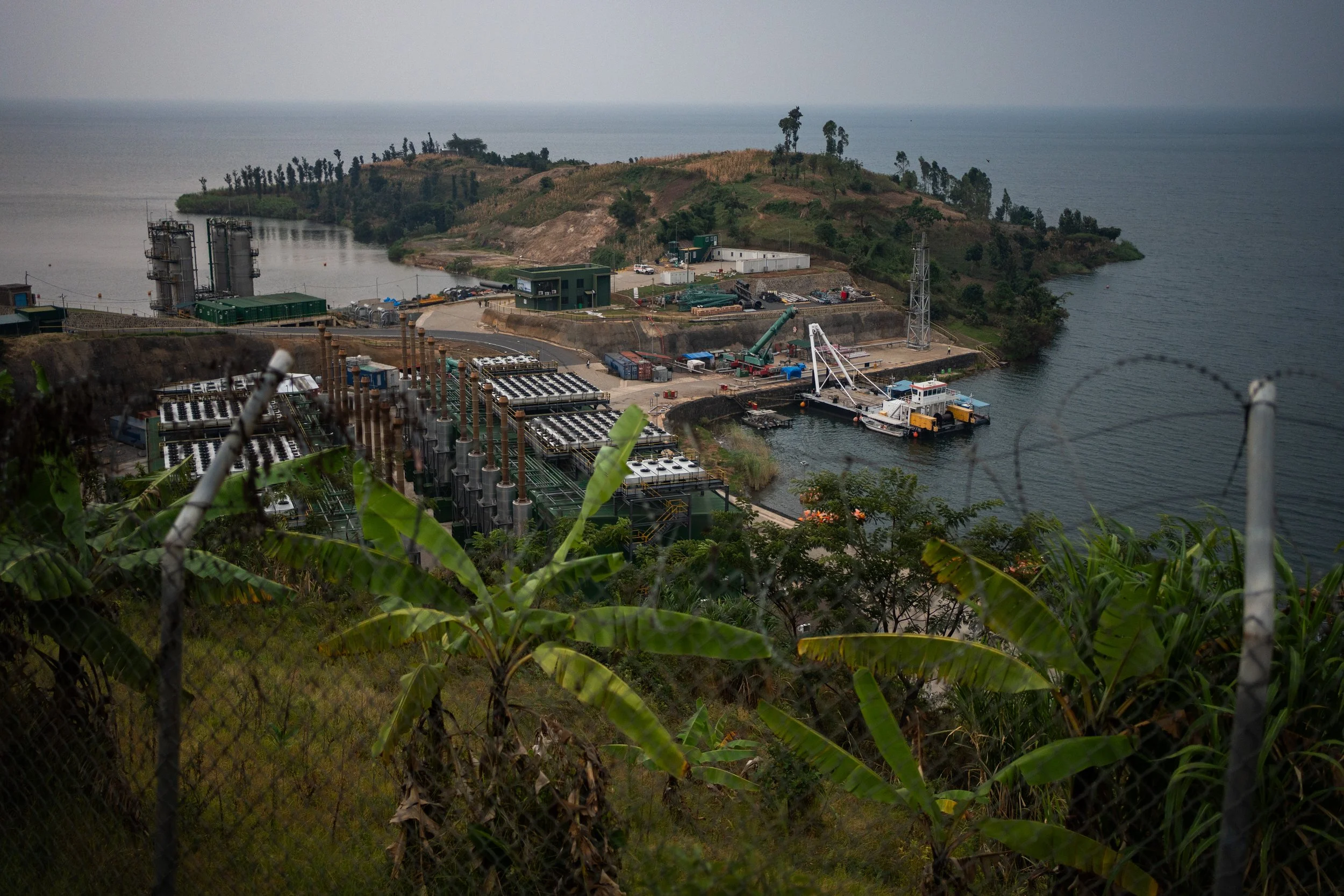
In 2015, Rwanda launched a project aimed at extracting methane gas from Lake Kivu to convert it into energy, either via anaerobic digestion or direct methane capture. Two companies, KivuWatt and Shema Power (pictured), have embarked on this initiative to transform methane into energy to supply electricity to the region.
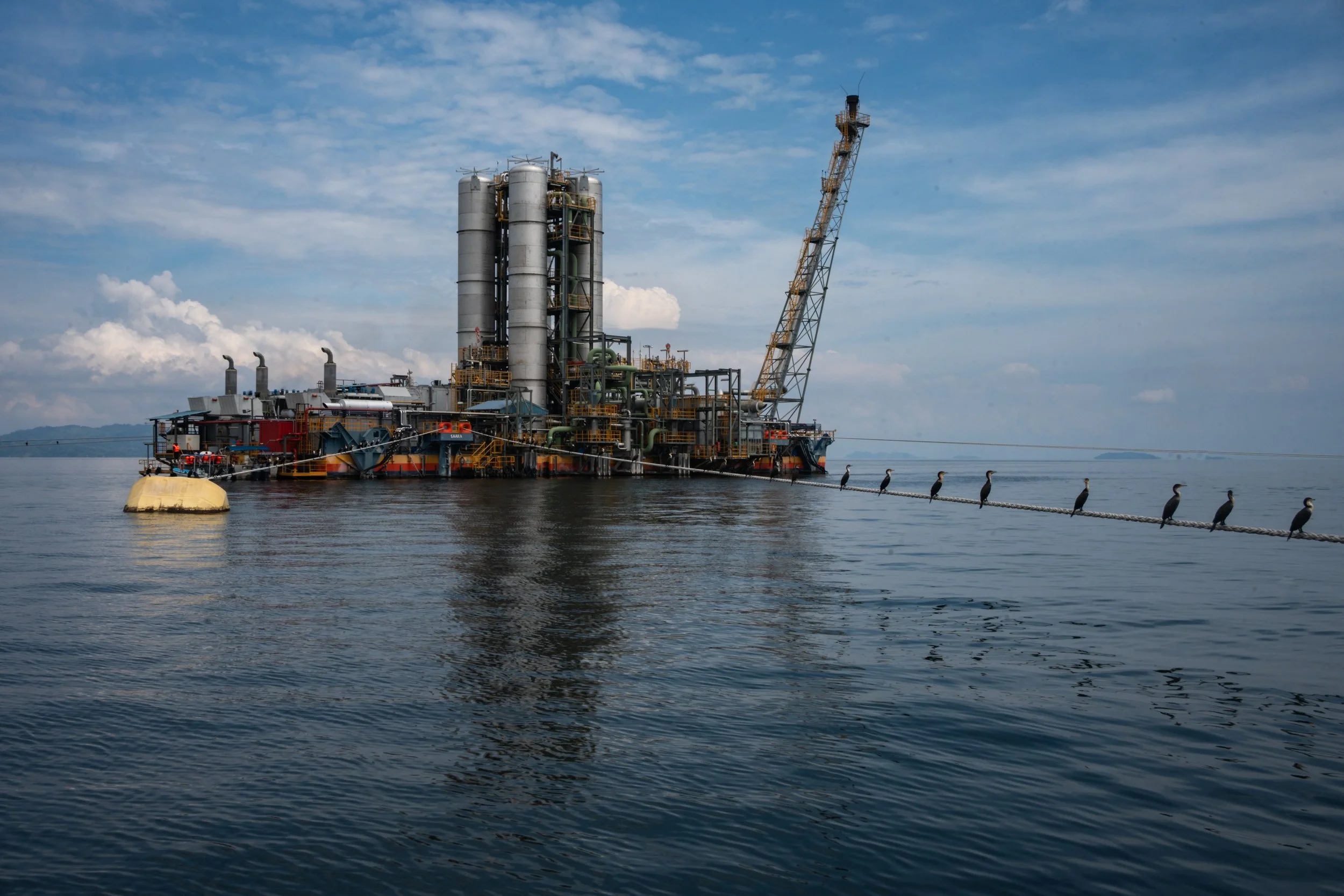
The KivuWatt platform, owned by the American company ContourGlobal, uses advanced technology to extract and convert methane from Lake Kivu into a renewable energy source. Currently, 30 % of Rwanda’s energy comes from the lake. “We do not yet know what the impact of large-scale extraction would be, but good scientists are working on it,” say some scientists. Although this extraction could offer benefits such as energy access and infrastructure development, concerns remain about the possibility of a limnic eruption triggered by a volcanic event.
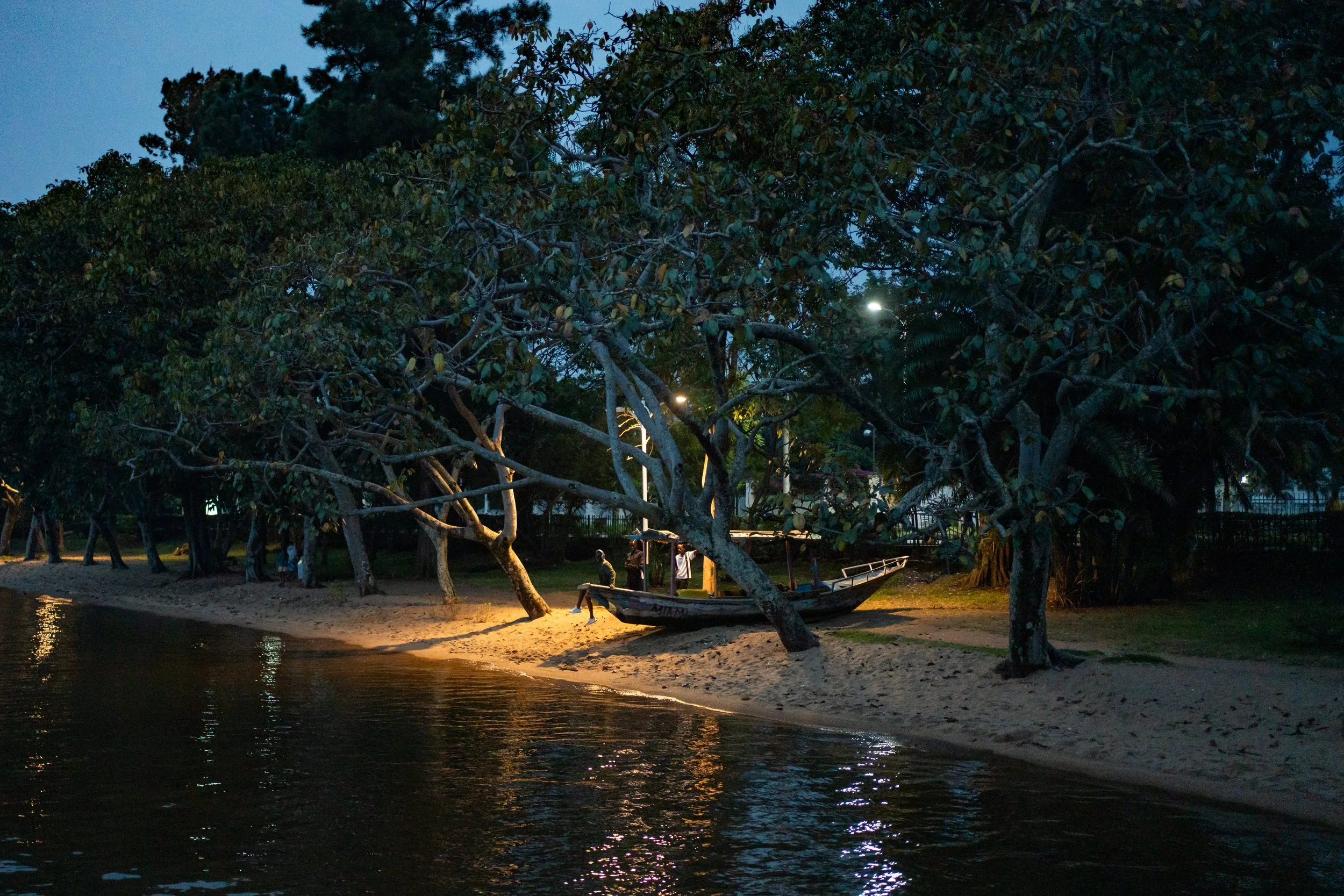
In Gisenyi, a park lit by public lighting borders the lake.
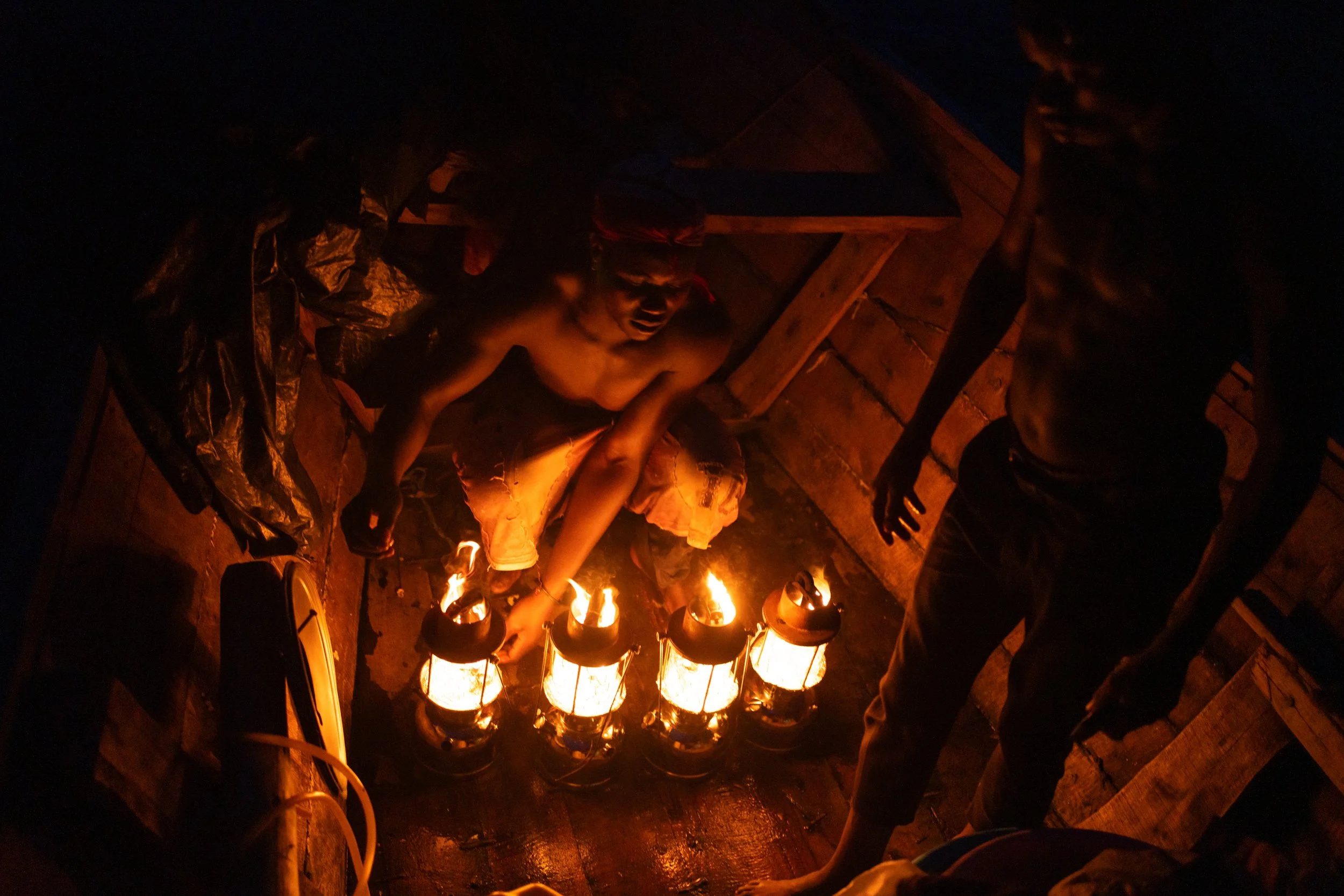
“It’s so fish come up to the surface. During the day, they stay in the deep waters, but at night they are drawn to the lights and become easier to catch. They only like moonlight, so on moonless nights, we trick them—and those are our best days,” recount Froduard, 25, and Emmy, 19.
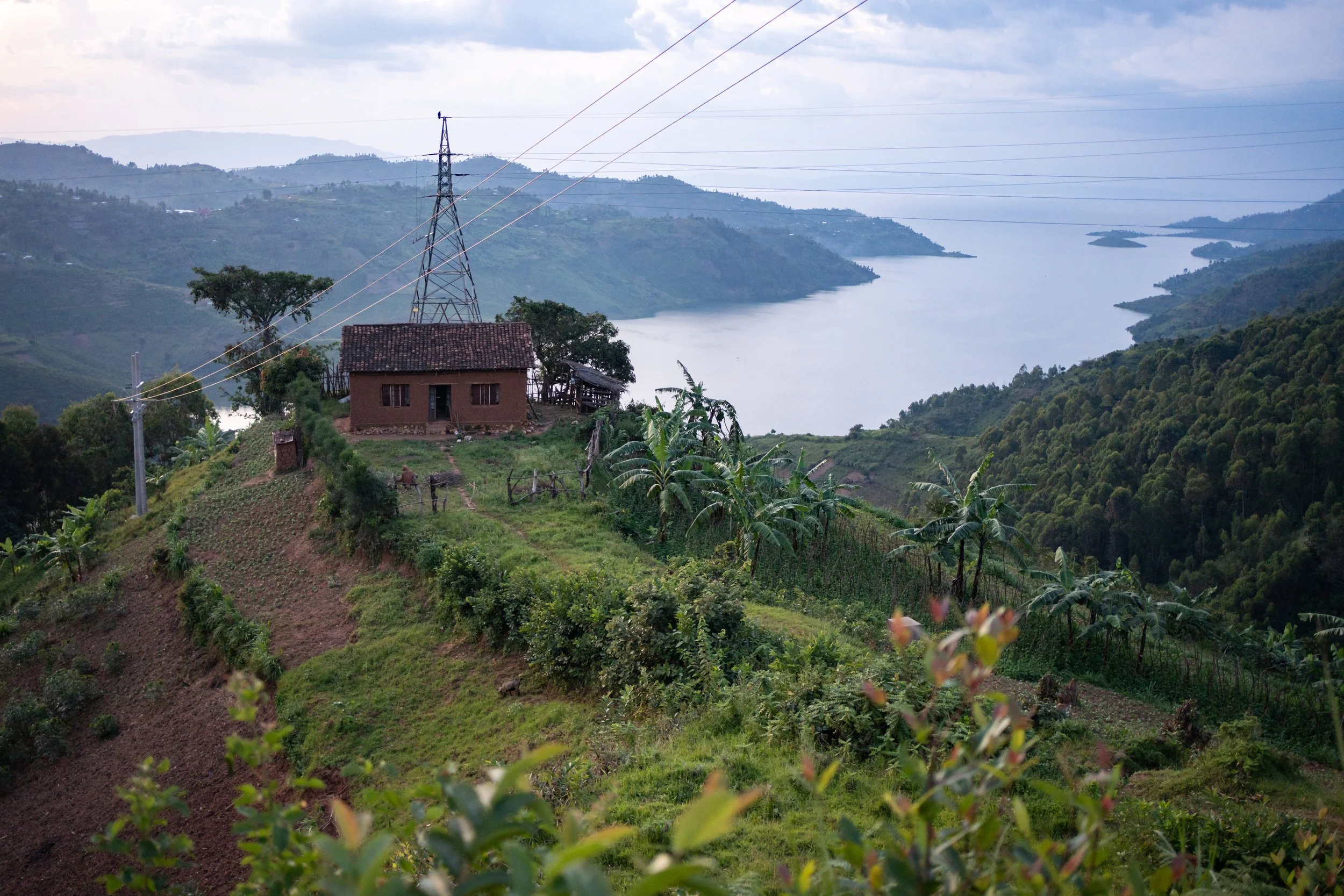
The lake provides energy to nearby schools and towns around.
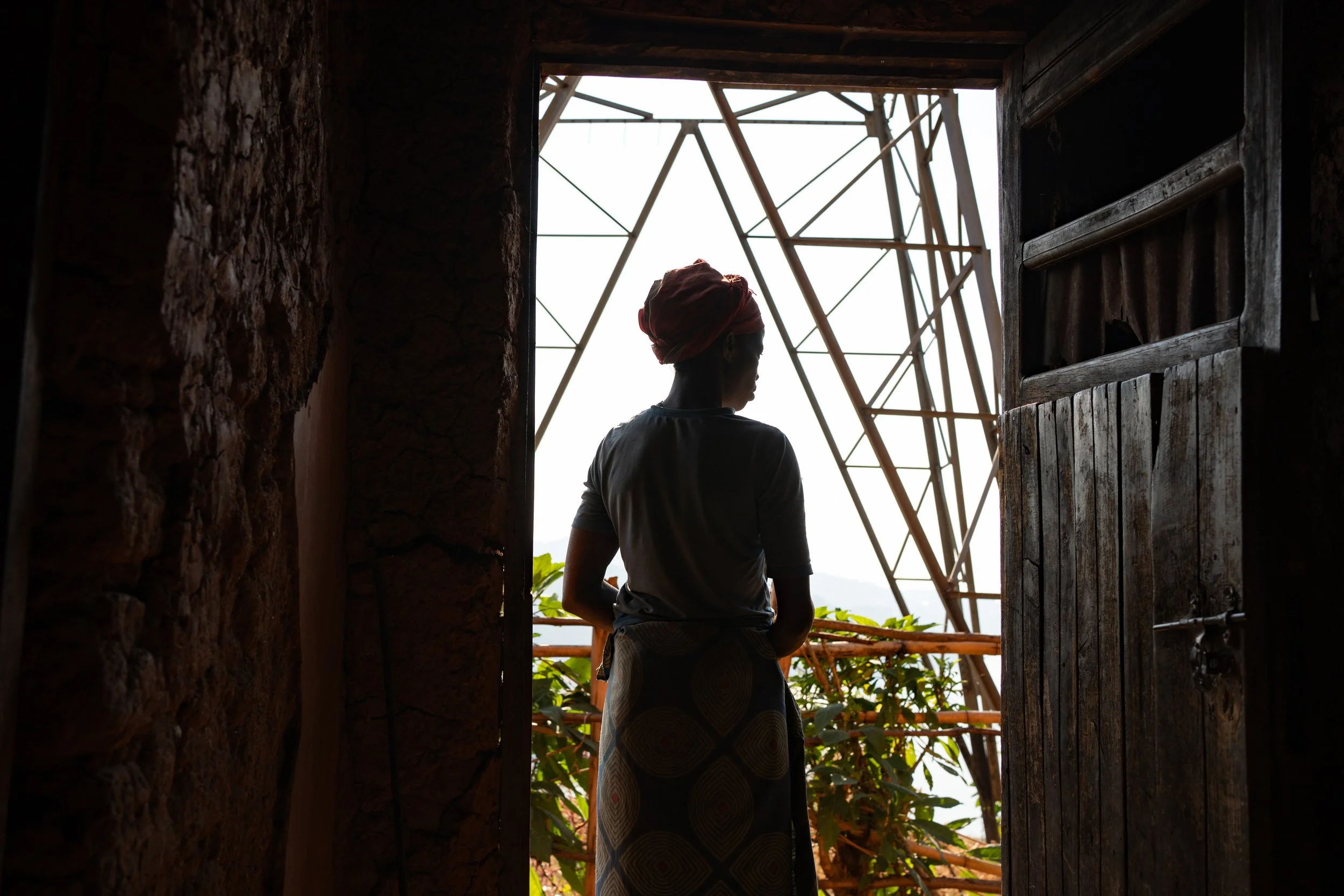
Thérèse has no electricity in the small house she occupies even if a high-tension power line runs by her garden. “In the evenings at home, I use my phone for light, which I then go recharge at my neighbors’,” she explains.
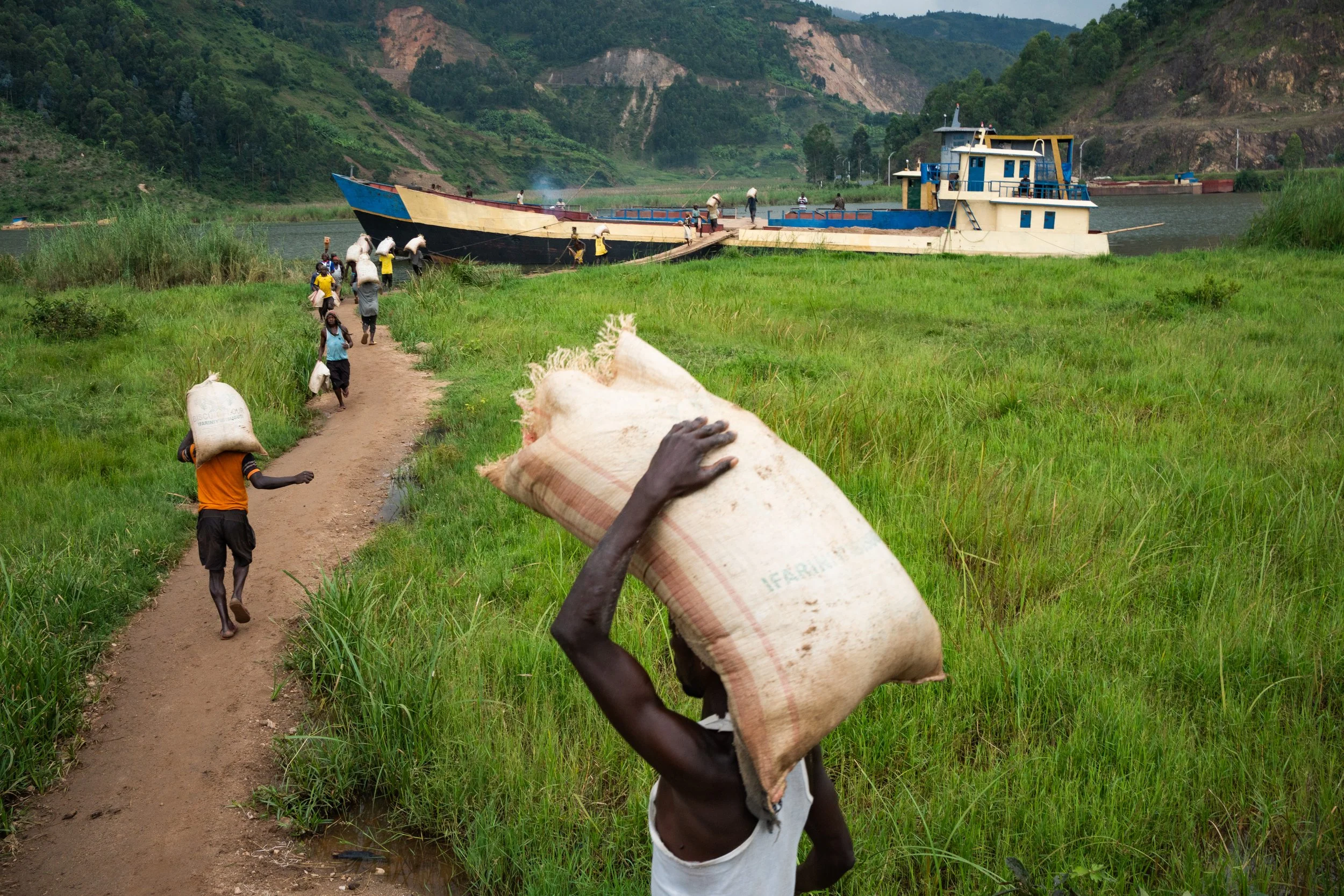
Workers load a boat with sacks of sand extracted from a river in Gishyita. Although Rwanda’s poverty rate dropped from 75.2 % to 53.5 % between 2000 and 2013, it has remained almost stagnant since, according to World Bank data.
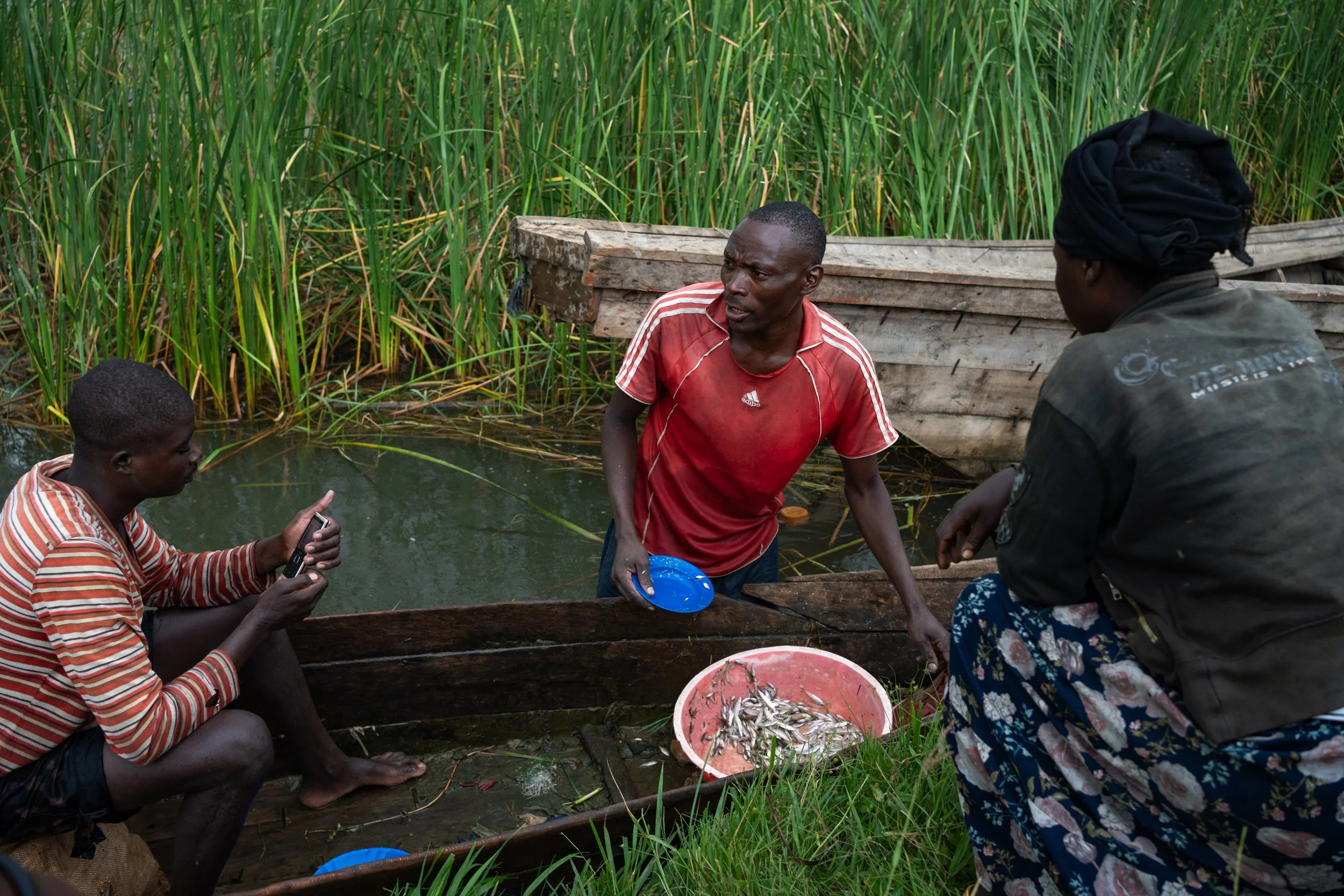
“I wish I understood where all the big fish have gone… These days, the once-abundant waters feel depleted, as if the fish are fleeing.” Claude, a sambaza fisherman on Lake Kivu in Mugonero, Rwanda, earns about 500 Rwandan francs per day (approximately €0.37), just enough to maintain his dilapidated boat and support himself.
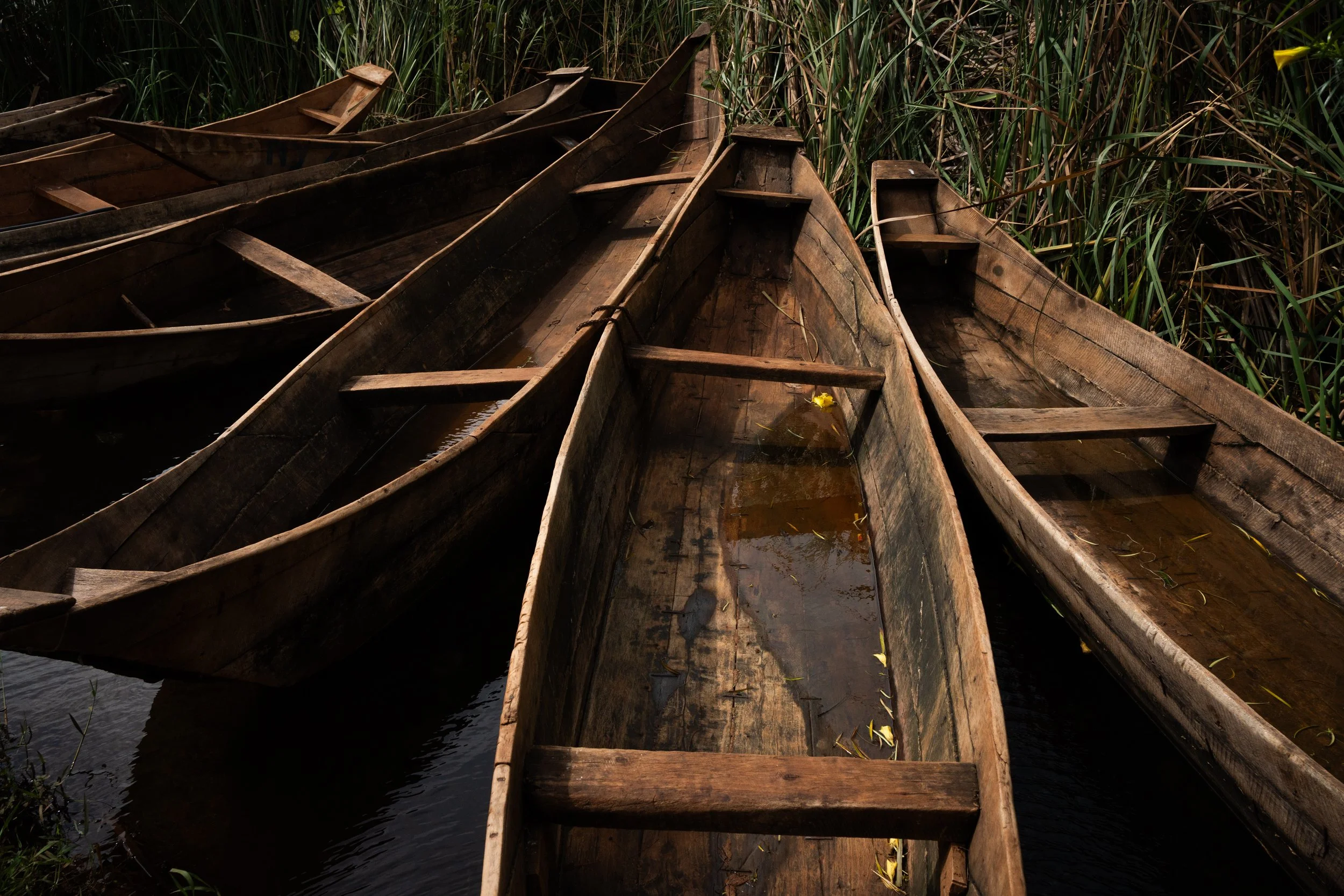
Traditional boats on the shores of Lake Kivu.
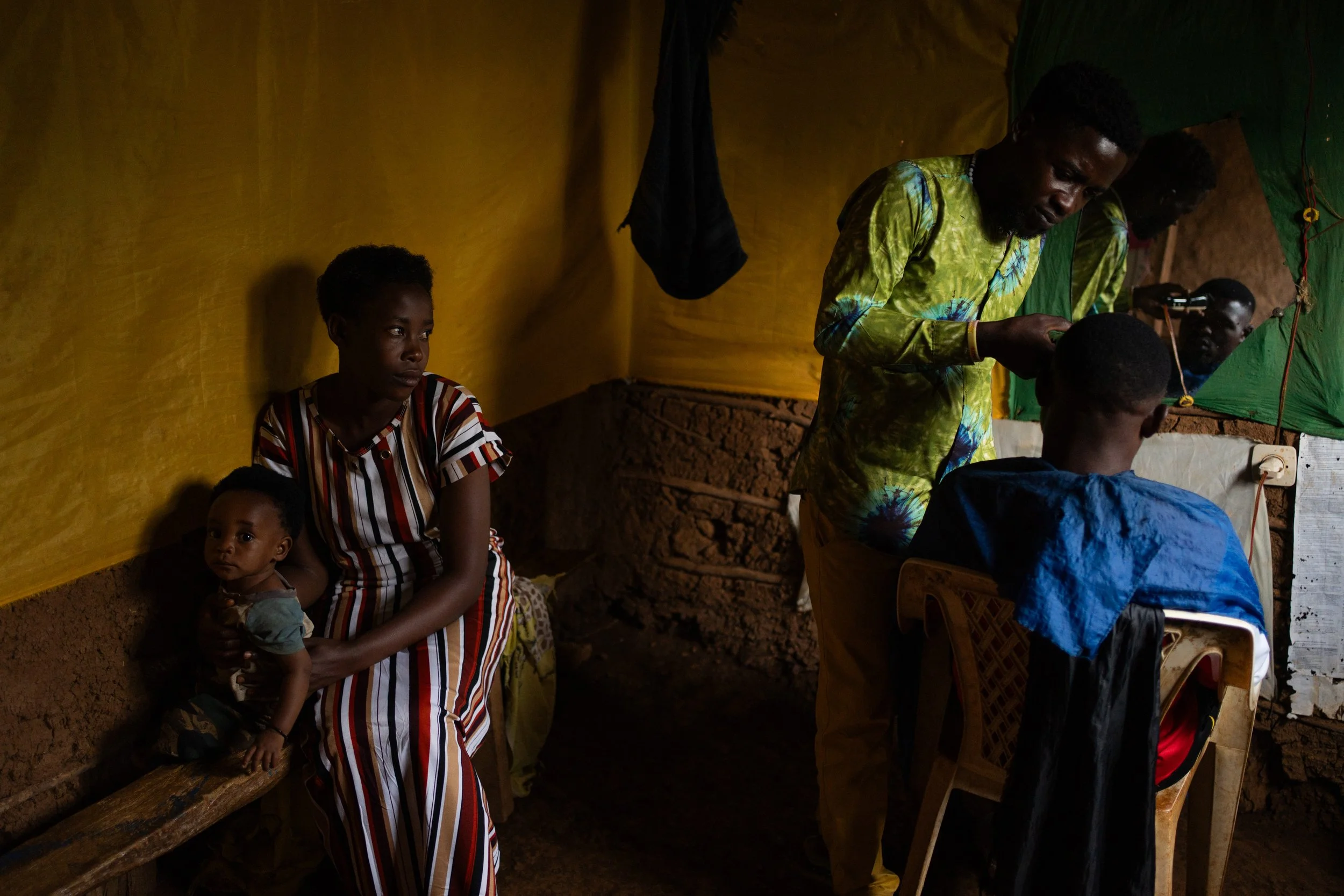
A barber on the island of Nkombo, along the shores of Lake Kivu. Like many others, this young father had to give up fishing due to insufficient income to support his family: “Being a fisherman is a life of misery.”
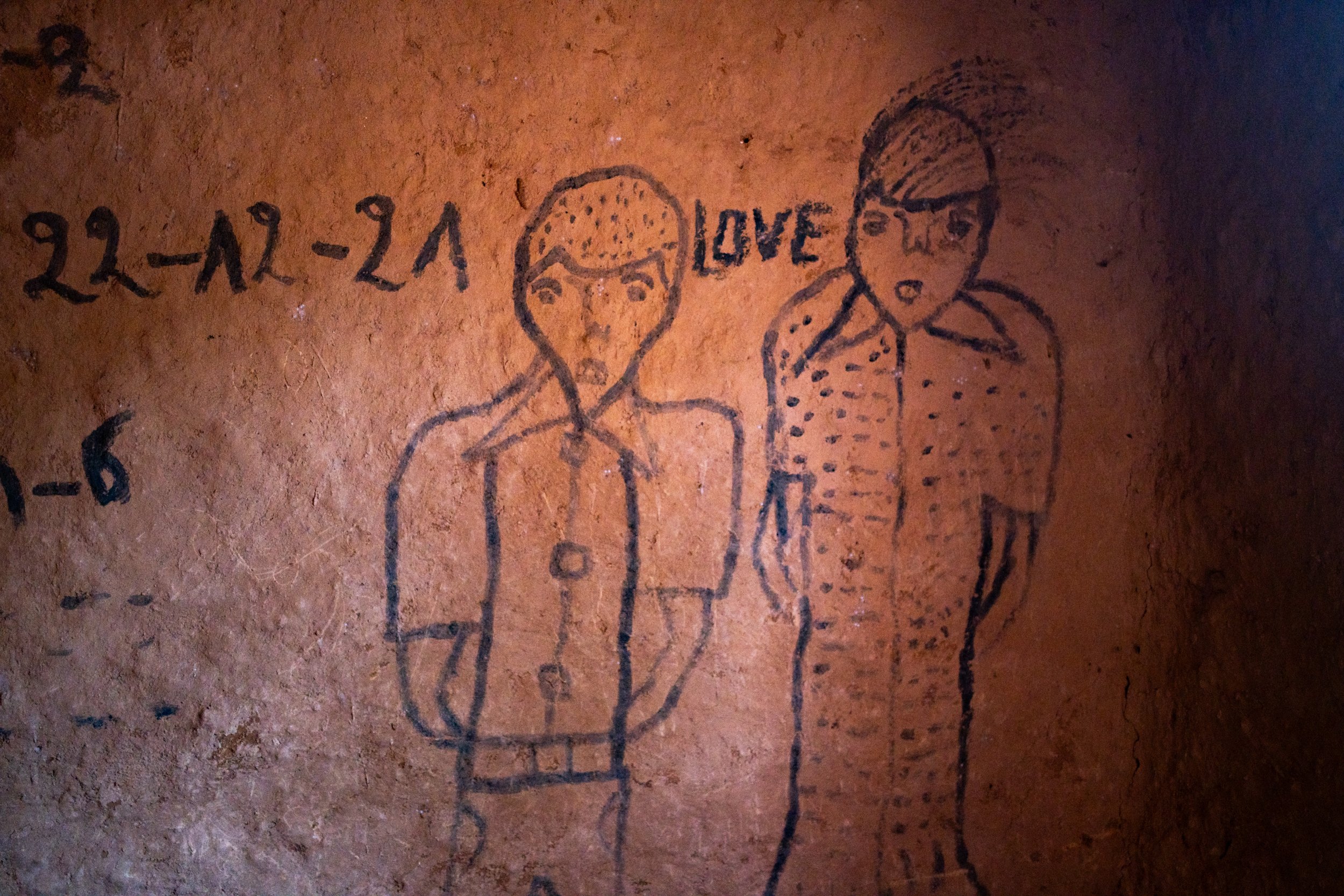
Drawings on the wall of a house on Nkombo Island in Rwanda. Located amidst the waters of Lake Kivu, the island was relatively spared by the genocide; three people were killed there. Many families managed to flee to neighboring the Democratic Republic of the Congo.
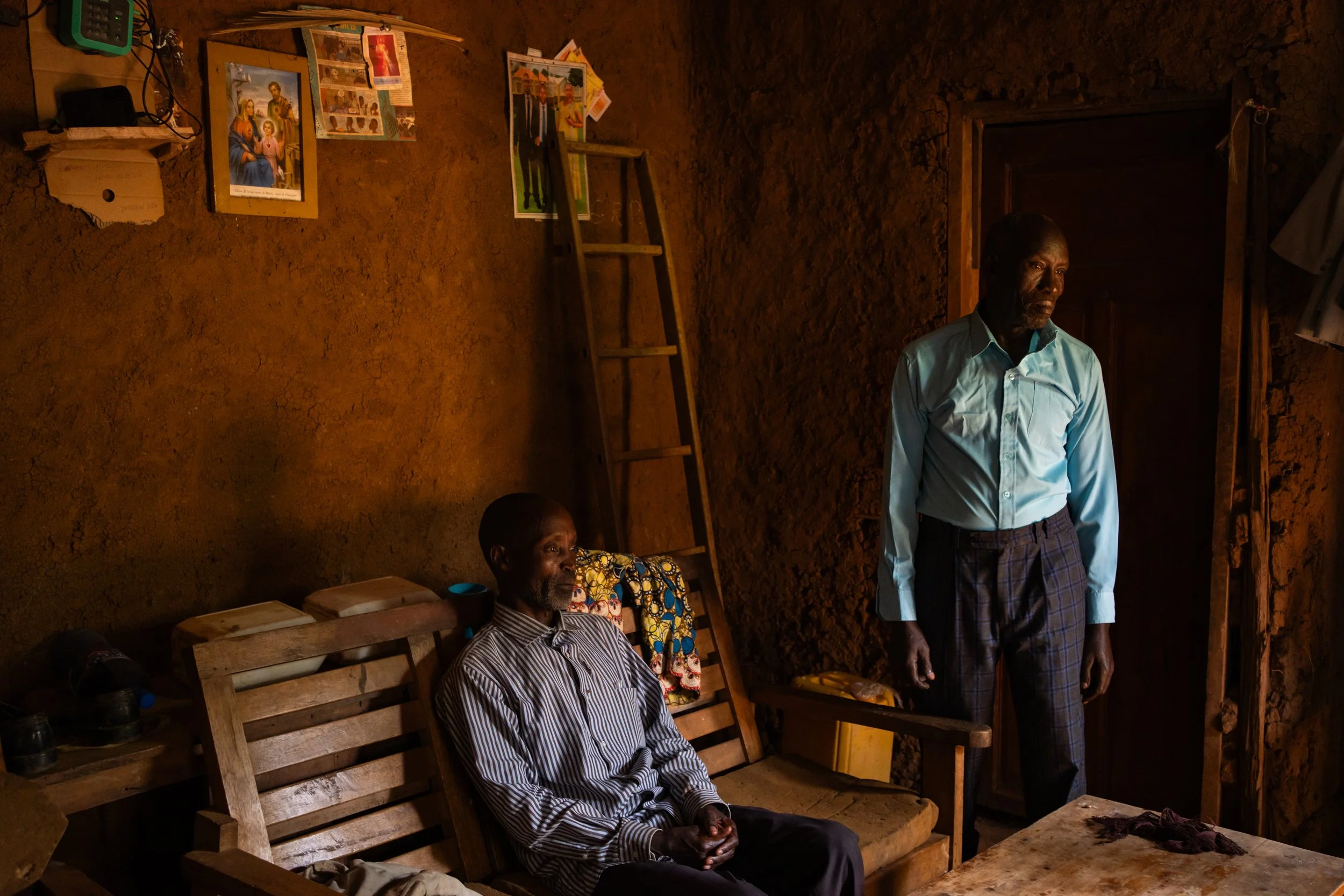
“It was my conscience that caught up with me, because we were already living like one family,” says Thadée, 70 (right). Thirty years ago, during the genocide against the Tutsis, Thadée helped Fabien, 58 (left), and his mother cross the lake to reach nearby Congo. Lake Kivu was not spared by the massacres that claimed nearly a million lives in 100 days (UN).
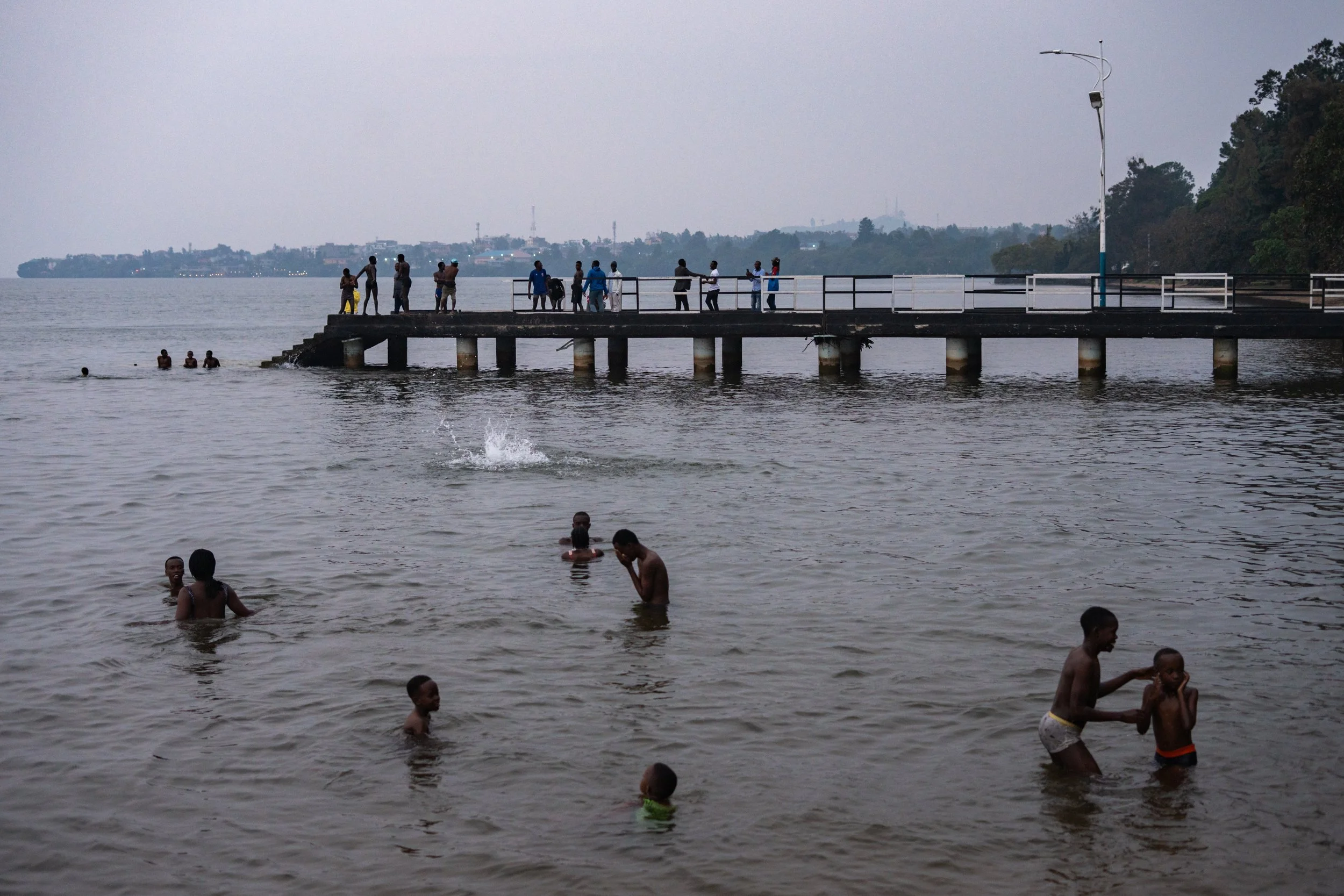
In Gisenyi, from the pier overlooking the lake, young people swim. Opposite, the city of Goma in the DRC. Tensions between these two countries have long been since 30 years. In 2021, DRC signed an agreement with the American company Symbion Power to exploit methane from Lake Kivu but nothing is implemented yet.
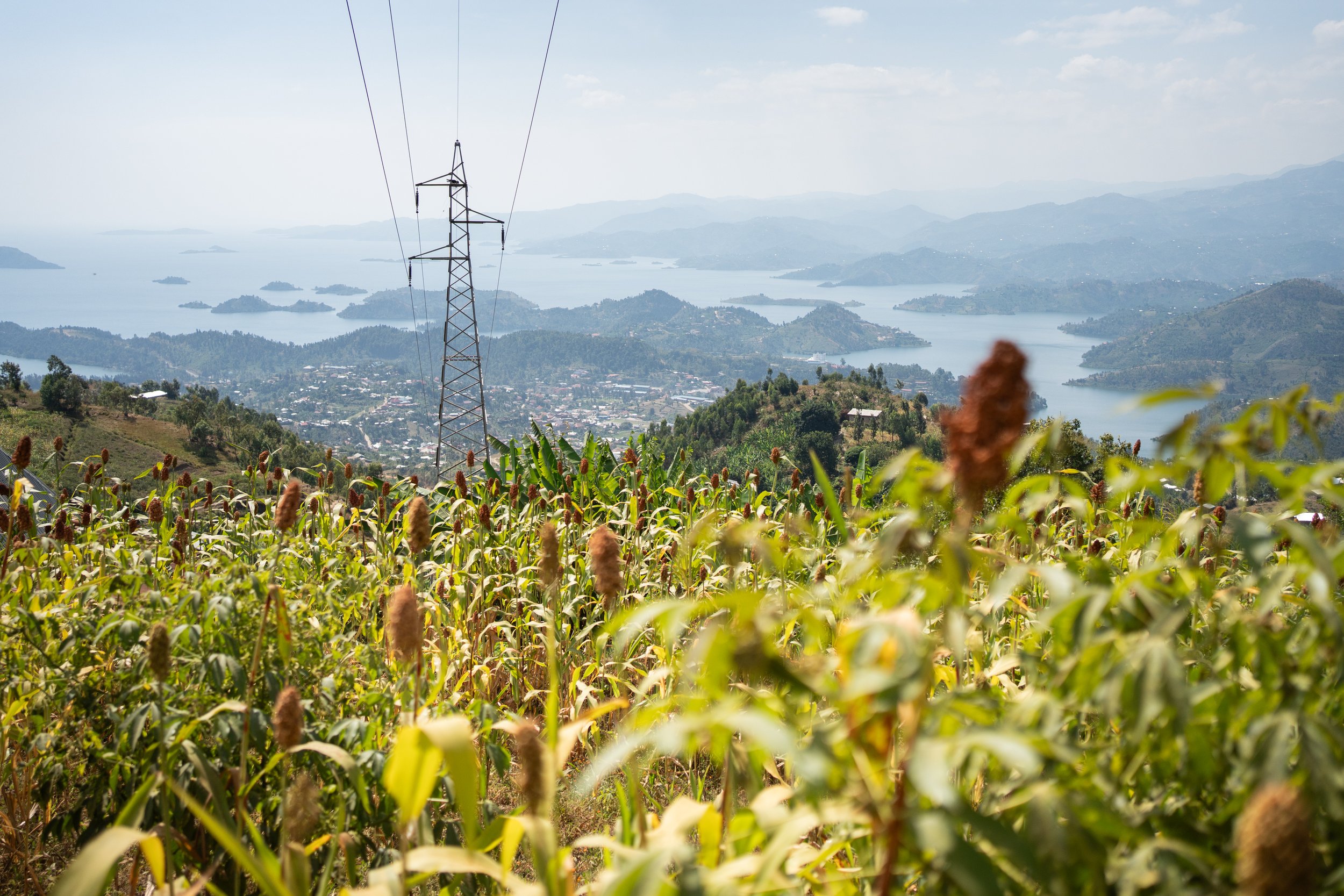
A high-tension power line towers above Lake Kivu, in the Karongi district of Rwanda.